
A season is not a reason to make a jewel. We begin with something worth carrying beyond it.
So the work moves away from trend-led shapes and surface effects, toward a reason for every form, materials specified in writing, and construction that is checked at each stage.
Much of the craft lies in knowing what to carry forward. Two pieces show how that unfolds.
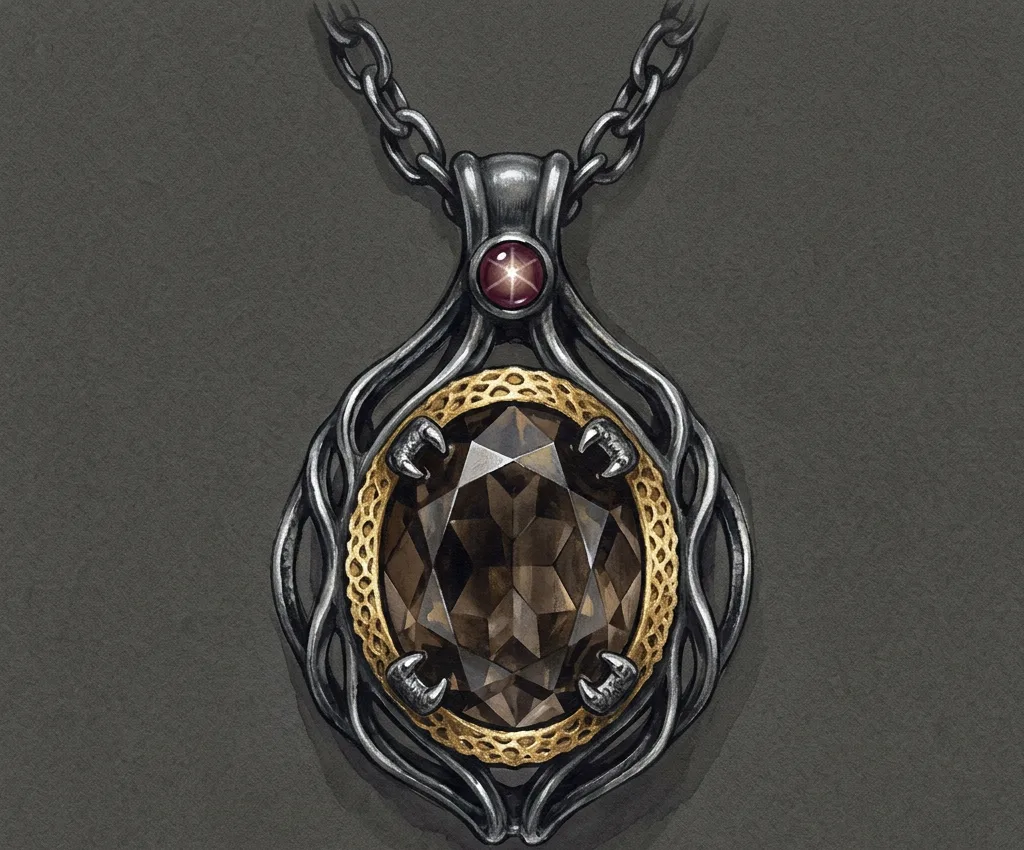
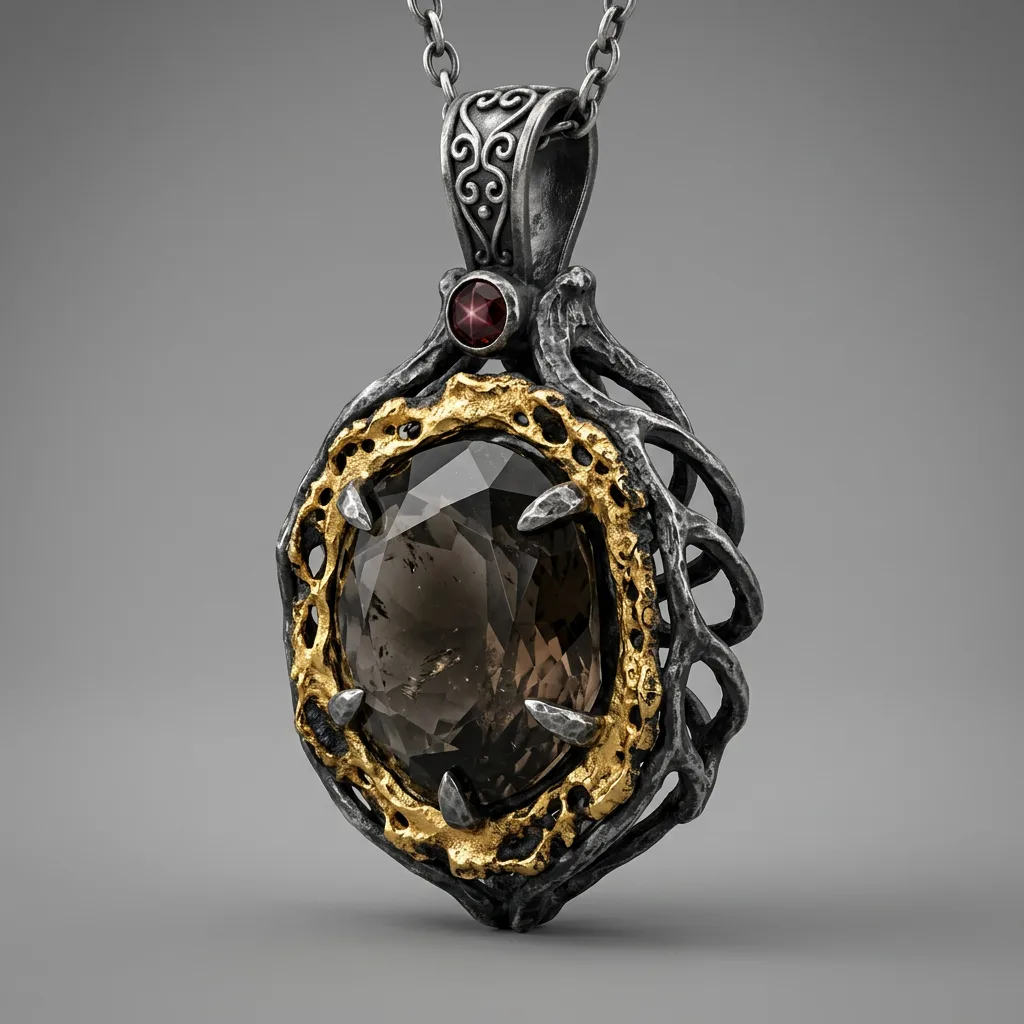
Vestige
The seed is gone and the ribs remain. Without petals or bright polish, the structure itself carries the stone.
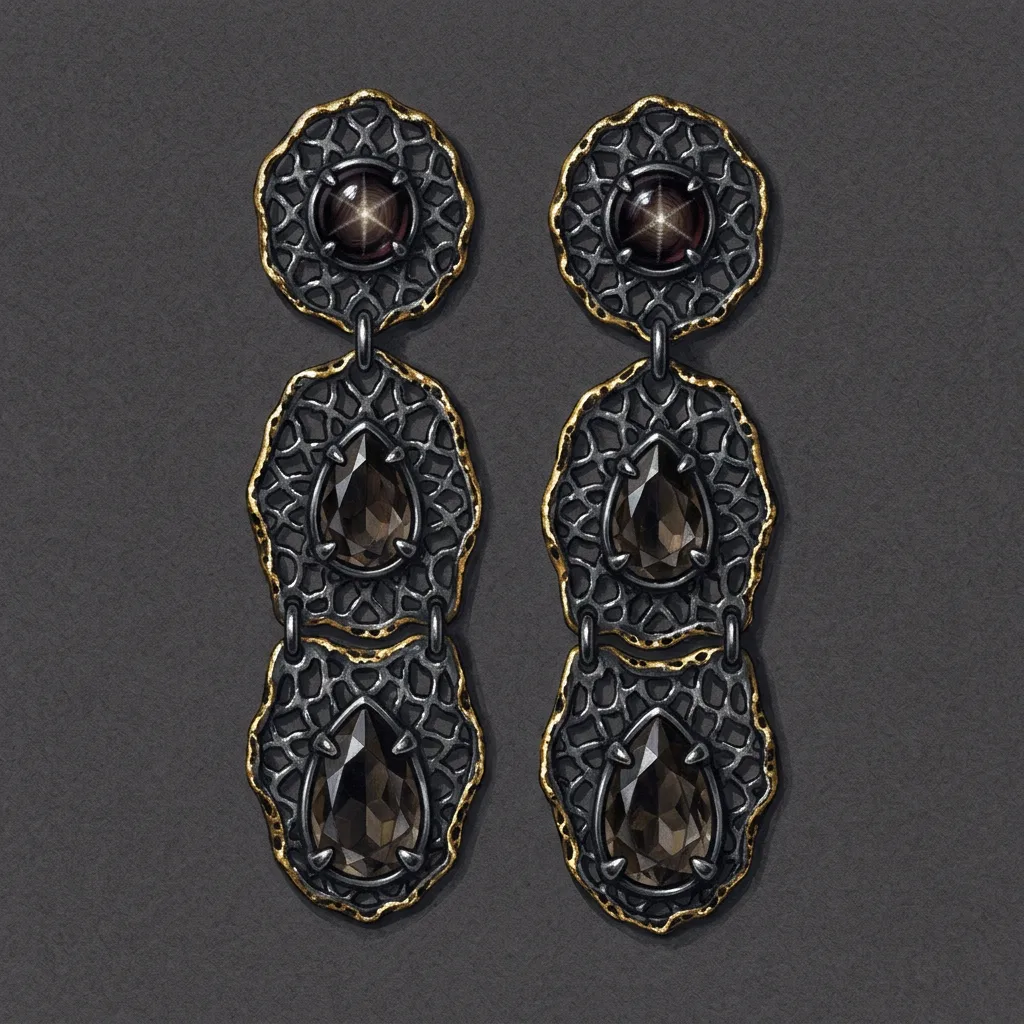
Cinder
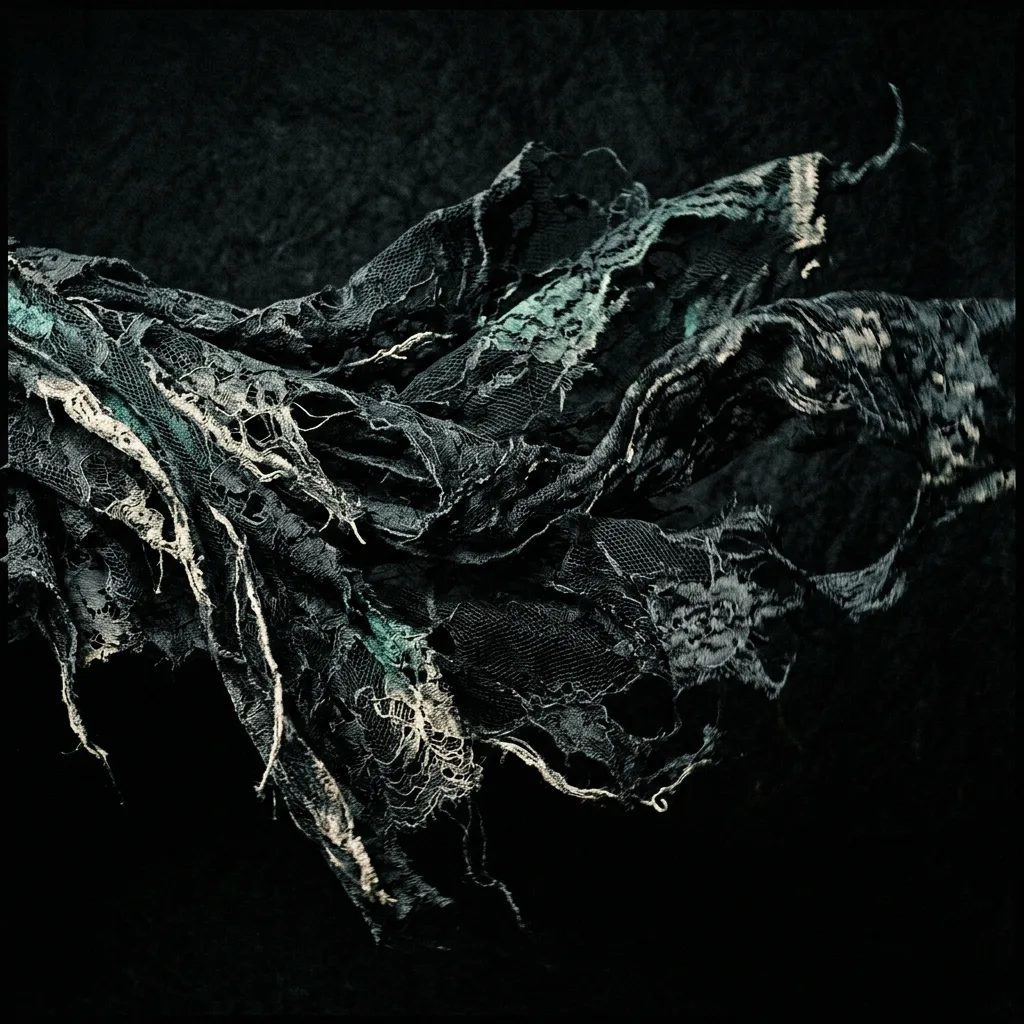
From the lace, only its openness and movement came forward, rebuilt as hinged metal that can bear real weight.
Six stages, from the first question to the final
check. Each one moves forward once its
requirements are settled.
Notes
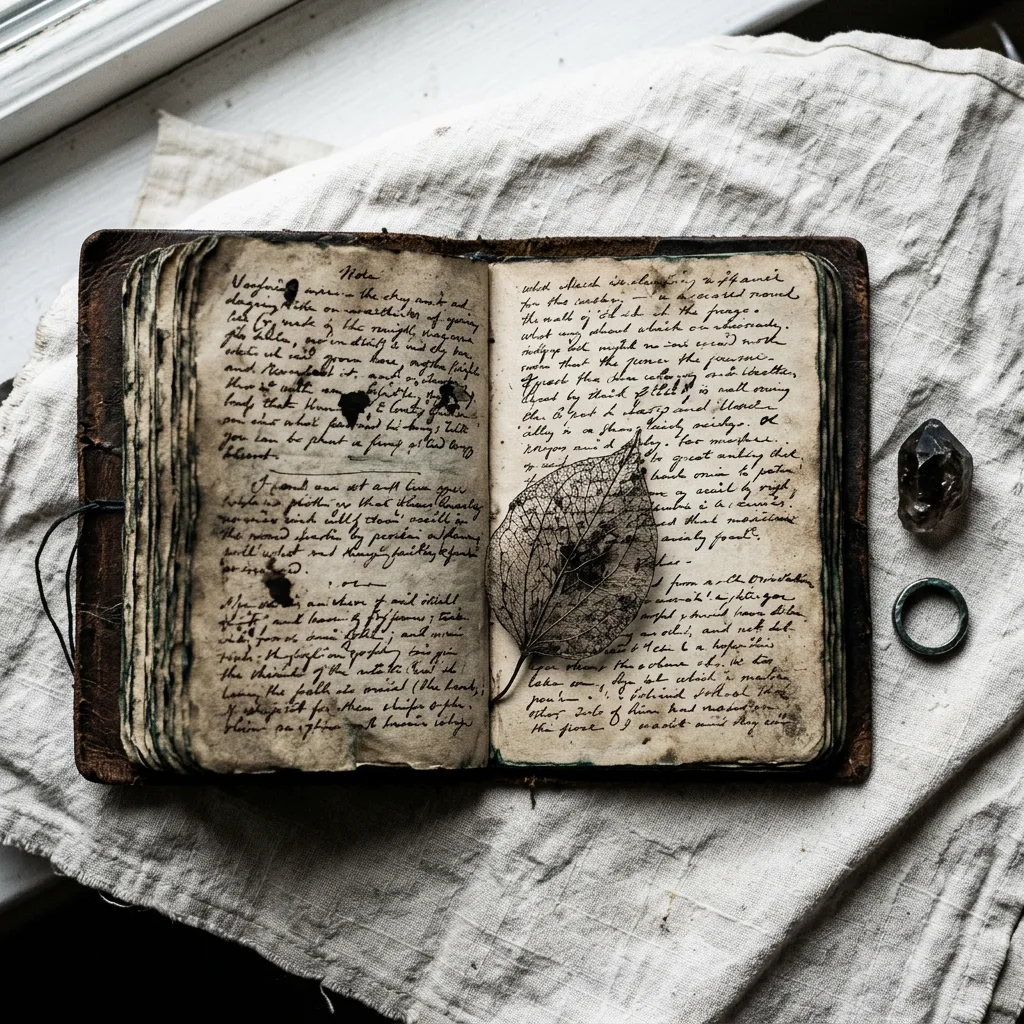
Vestige began in a journal. Cinder began with a reference from outside the studio. Neither starts from a trend report or a best-seller. The first task is to decide whether the source has enough substance to justify a jewel at all.
Drawing
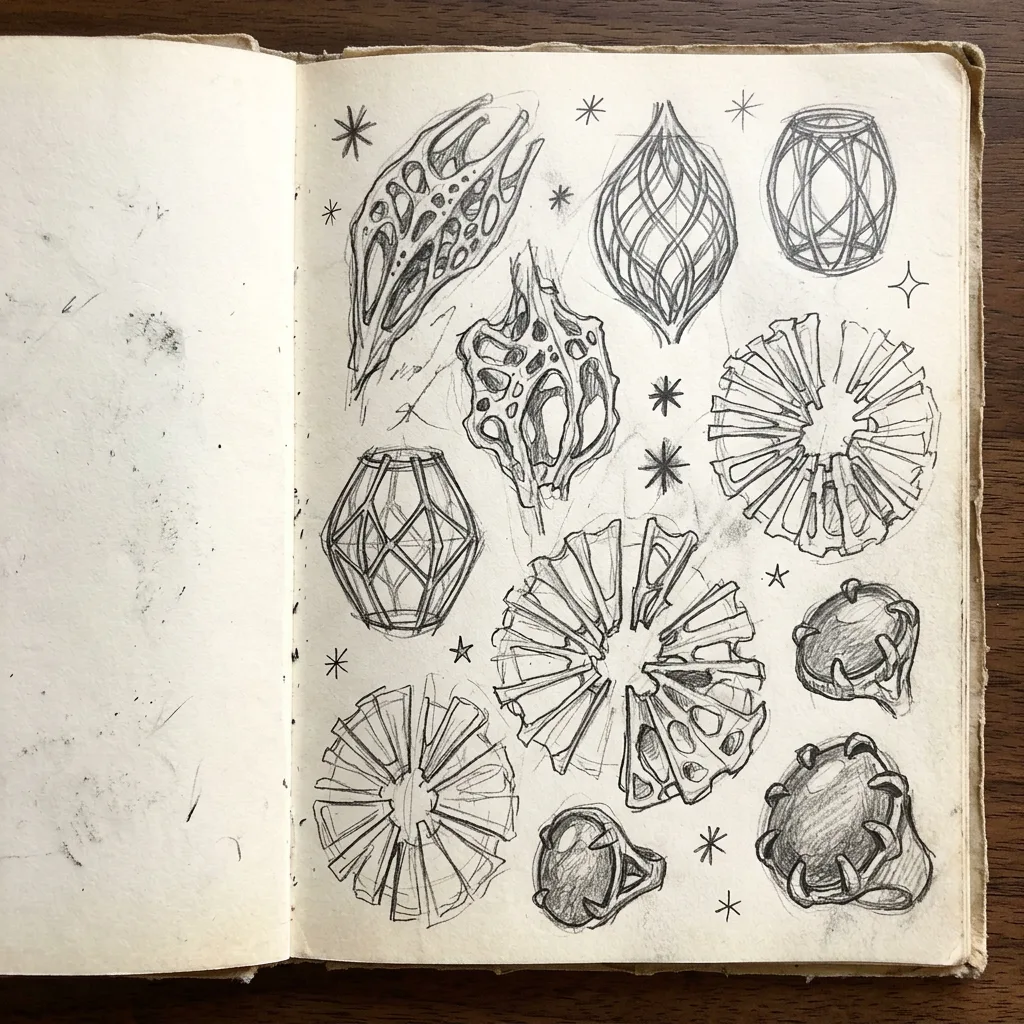
Loose drawing follows: the same rib, claw and hinge drawn repeatedly until it is clear which shapes are structural and which are merely decorative.
Choosing
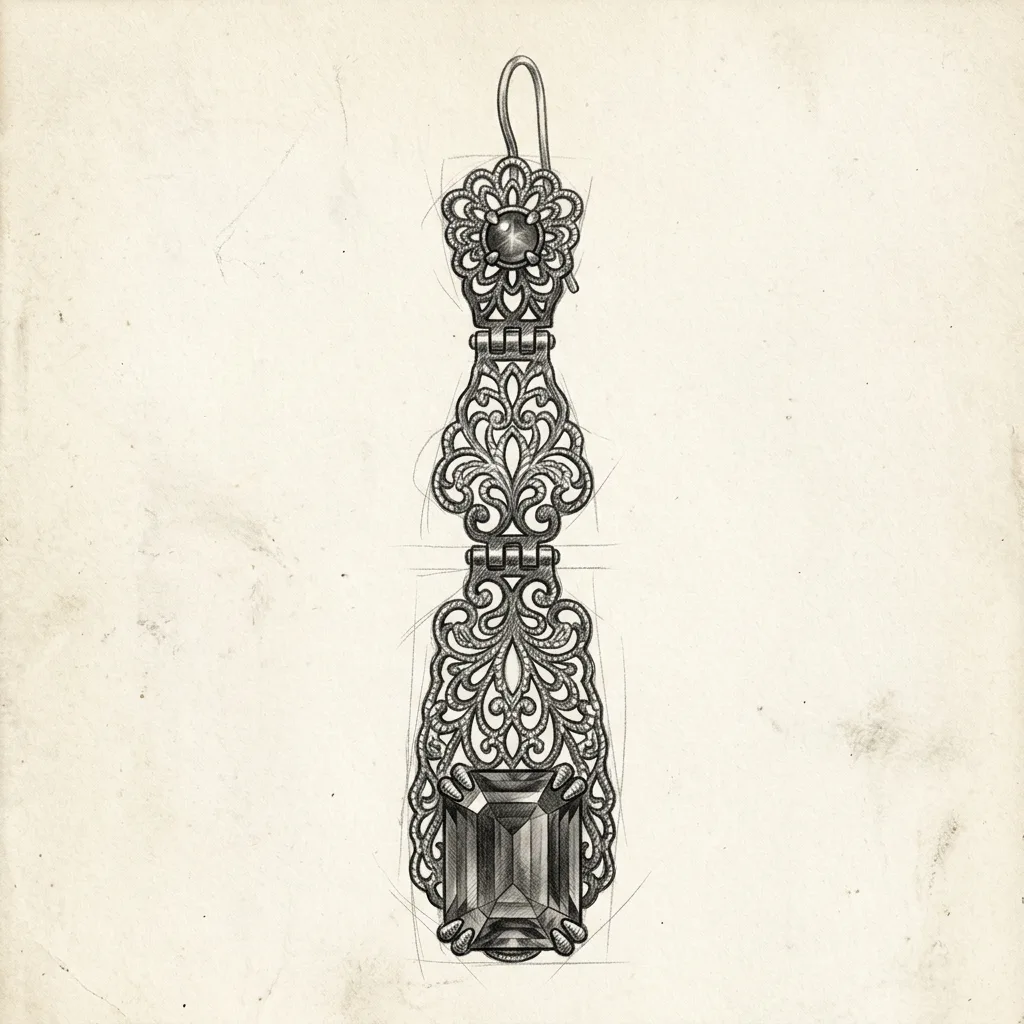
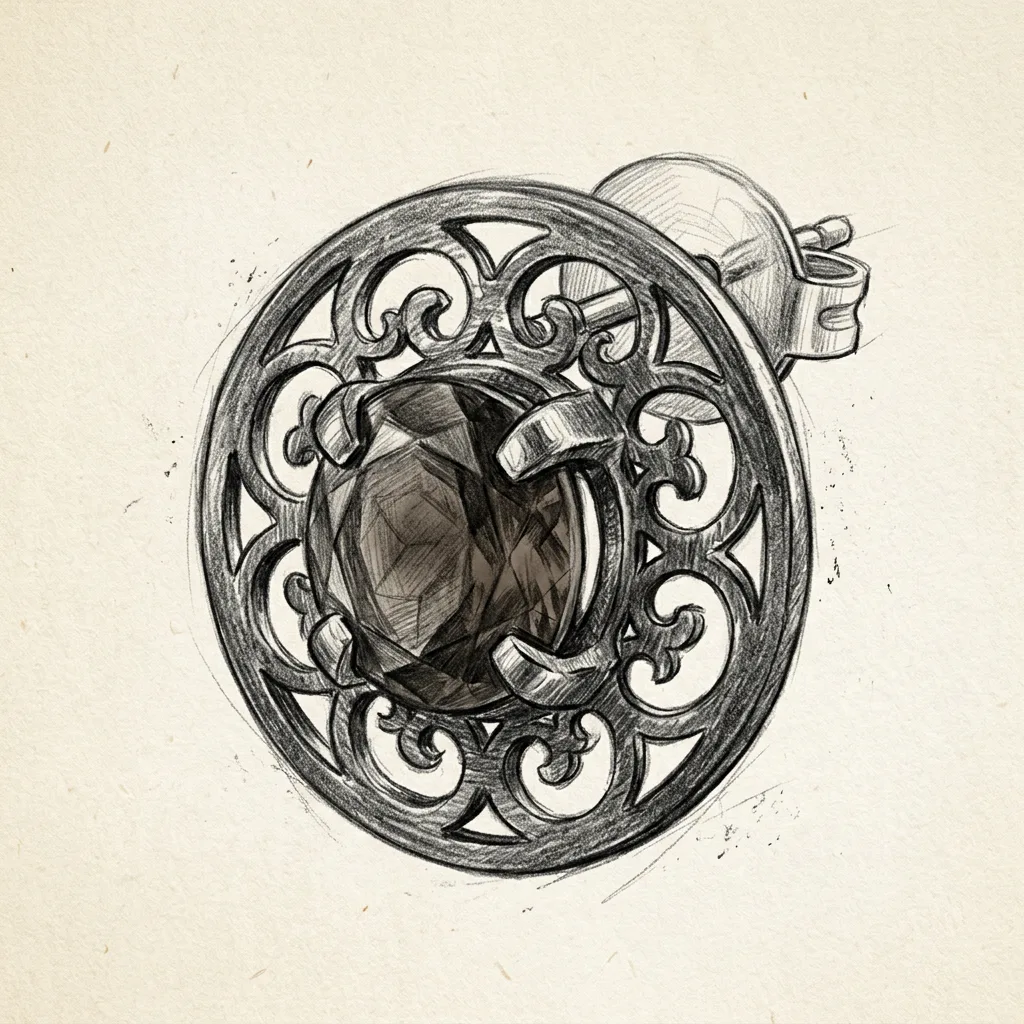
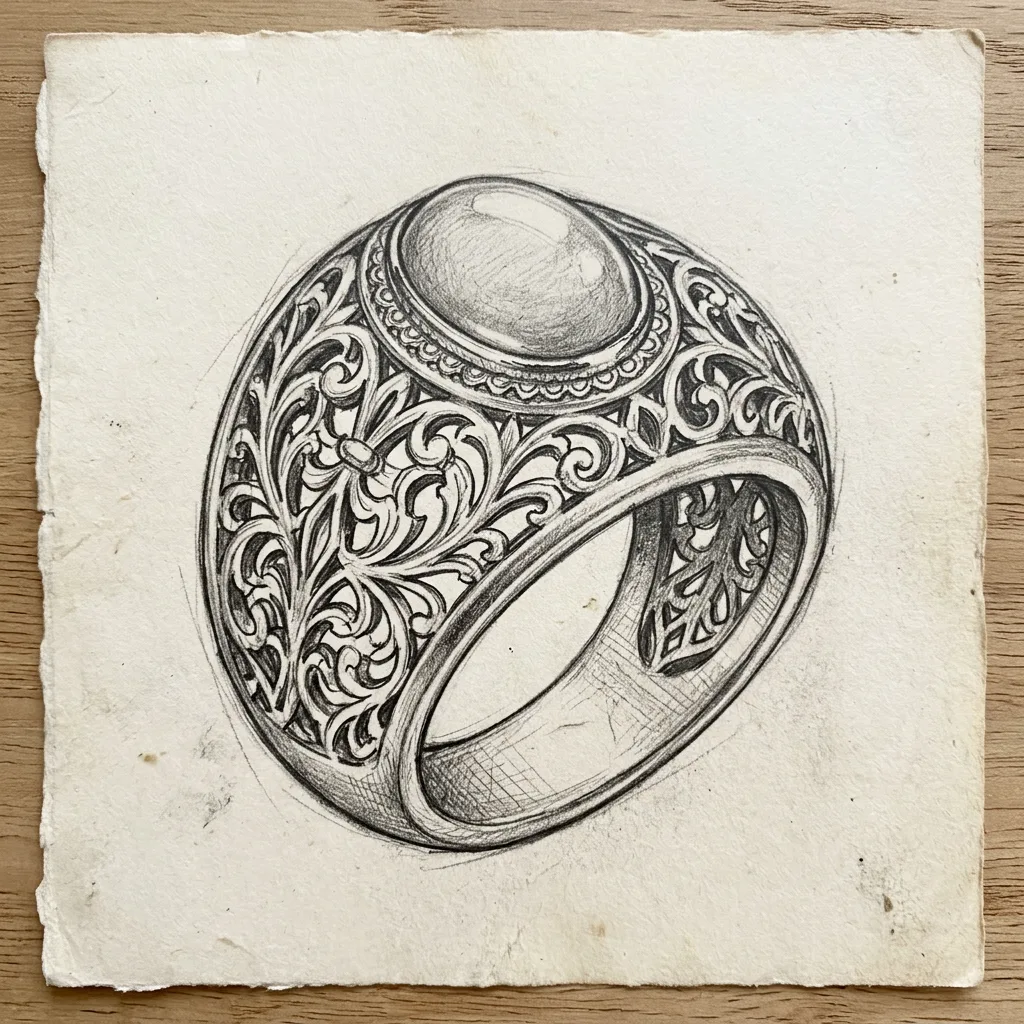
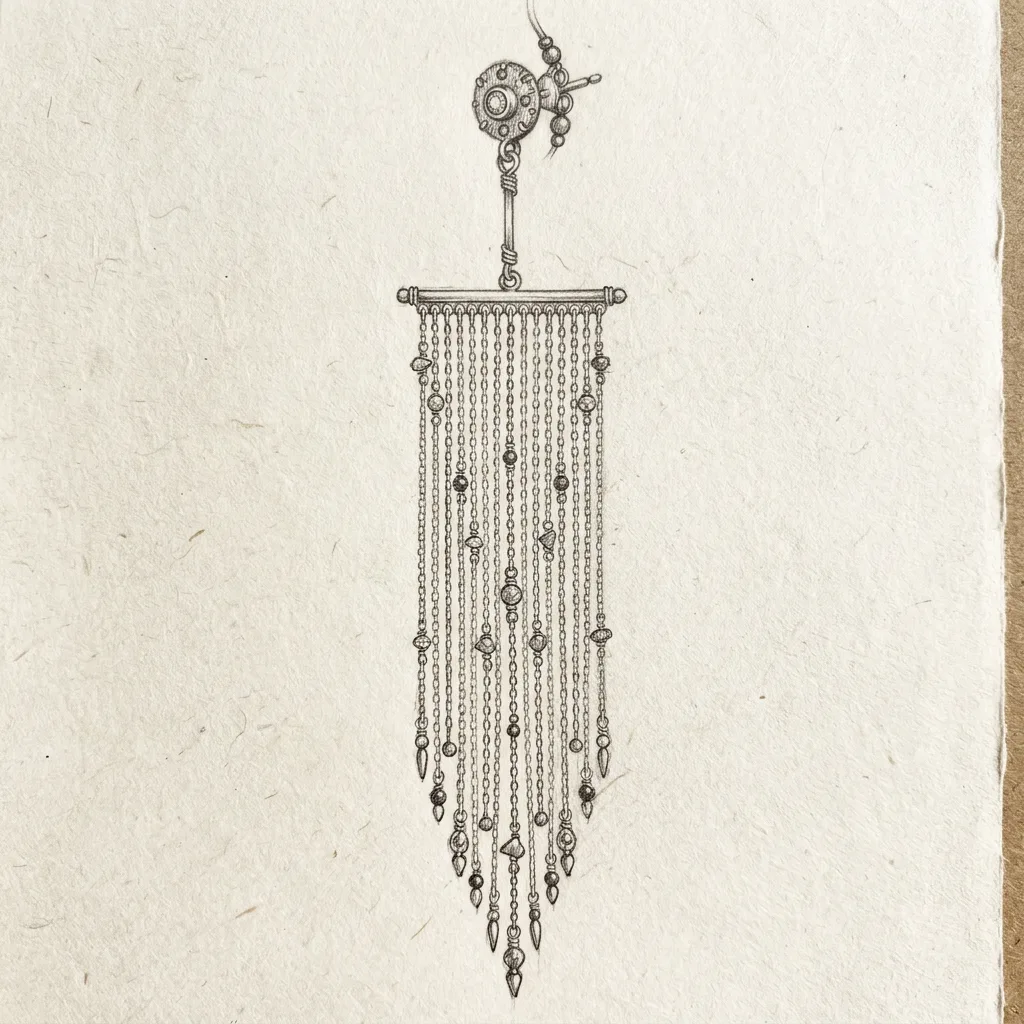
Several directions are developed before one is chosen. Some are attractive and still stay behind, because they answer a different question. The locket enclosed the stone; the cross carried a meaning from elsewhere. The stud had weight without movement, the fringe movement without structure.
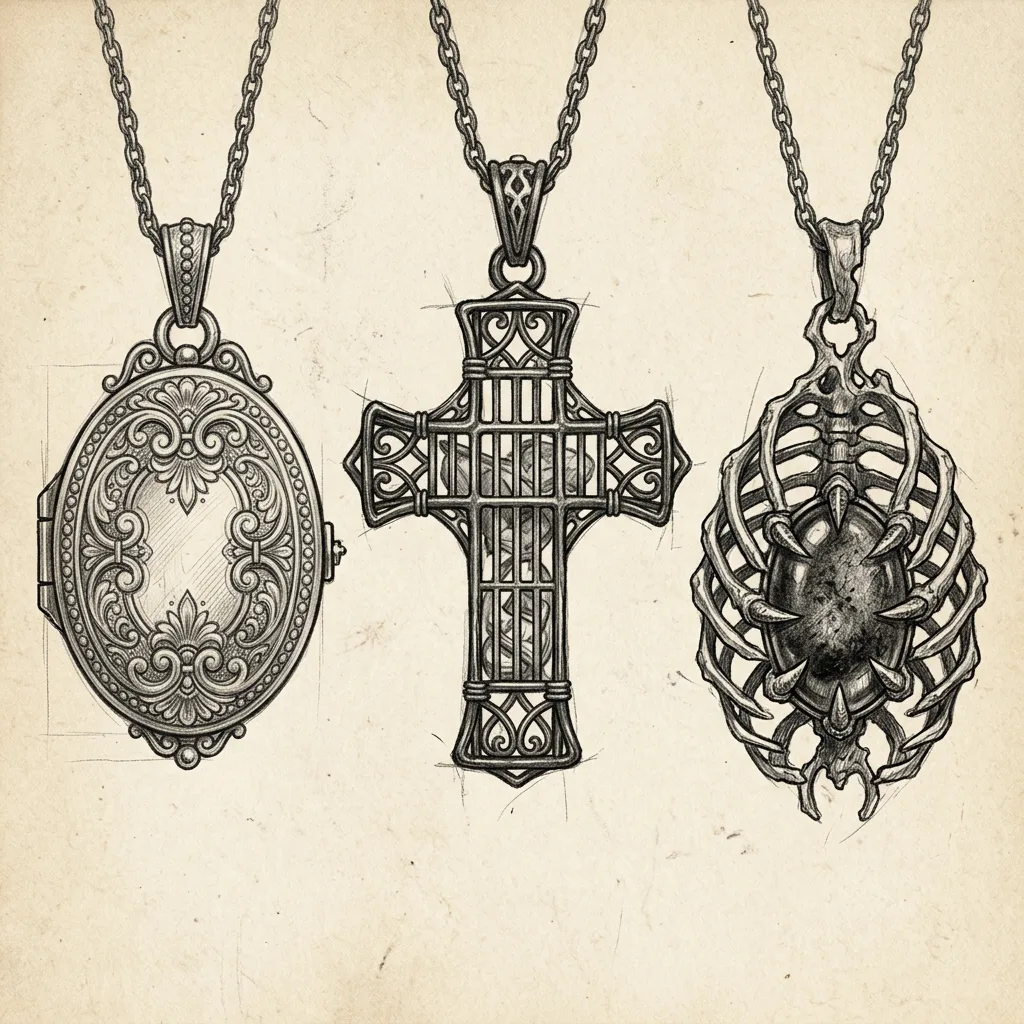
Cinder · earlier directions
Technical definition
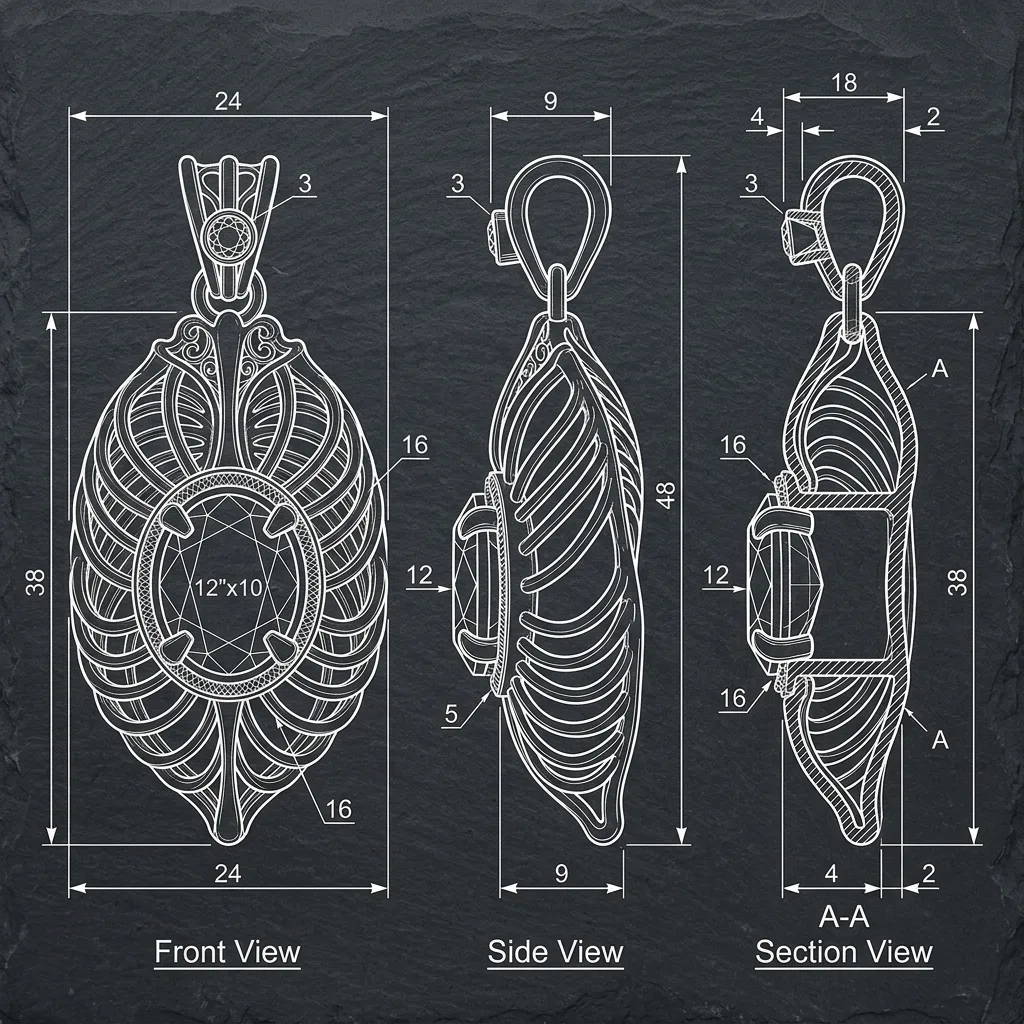
A painting is an intention, not a product. A written specification fixes metal, stones and dimensions. CAD tests whether the ribs carry the stone, whether the claws hold and whether the hinges move freely. A measured blueprint gives every specialist the same reference.
Spec sheets record the materials, dimensions and finish. Tech packs bring those requirements together with construction notes, component details and the current drawings. Production blueprints set out measured views, tolerances and assembly references. CAD defines the form in three dimensions; the documents carry that form into a shared manufacturing brief.
Bench
In New York, each piece is cast, oxidized, assembled, set and finished by hand. The metal is examined before oxidation as well as after, so the dark finish rests on a sound surface.
Our bench expertise includes a GIA-credentialed master bench jeweler. It is patient, exacting work: considering how a stone sits, how a setting carries its weight, and how a surface responds to finishing. Small adjustments receive the same attention as the larger form. The time invested in those decisions becomes part of the piece.
Responsible sourcing begins with knowing what is being purchased and from whom. Supplier selection, material specifications and clear communication about gemstone identity, treatments and metal purity guide the work. Available supplier documentation and gemological reports support that review, with provenance and recycled content checked against the evidence for each material. Gemological knowledge and meticulous bench practice bring that attention from sourcing through to the finished setting.
A considered critical path
Timeline management follows the work through feasibility and sourcing review, CAD and prototyping, sample approval, material procurement and made-to-order production. Compliance checks, final inspection, packaging and insured delivery are accounted for before dates are confirmed. Dependencies are reviewed with the bench, with room for revisions rather than a fixed promise made before the piece is understood.
Inspection
Our framework calls for review at three points. Each check is completed, and anything that needs attention is corrected, before the piece continues.
| After casting | Metal fill, porosity, cracks and dimensions. |
|---|---|
| After setting | Gemstone identity, claw security and alignment. |
| Before release | Finish, oxidation, closures, markings and presentation. |
A shared direction, developed over time
The two pieces show the work at an individual scale. A collection asks a further question: what belongs together, and what does each piece contribute? A shared material language, recurring forms and a considered range of pieces give the collection its direction. Each design still needs its own specification, technical development and inspection. We use a collection design matrix—a checklist for each piece—to keep its role, materials and development requirements in view alongside the collection as a whole.
For a phased rollout, the first group of pieces establishes the design and production requirements. Later additions can build on what has been resolved, rather than starting the work again. Quantities and release timing remain tied to material availability, manufacturing capacity and readiness—not simply to a launch date.
What the Fire Leaves
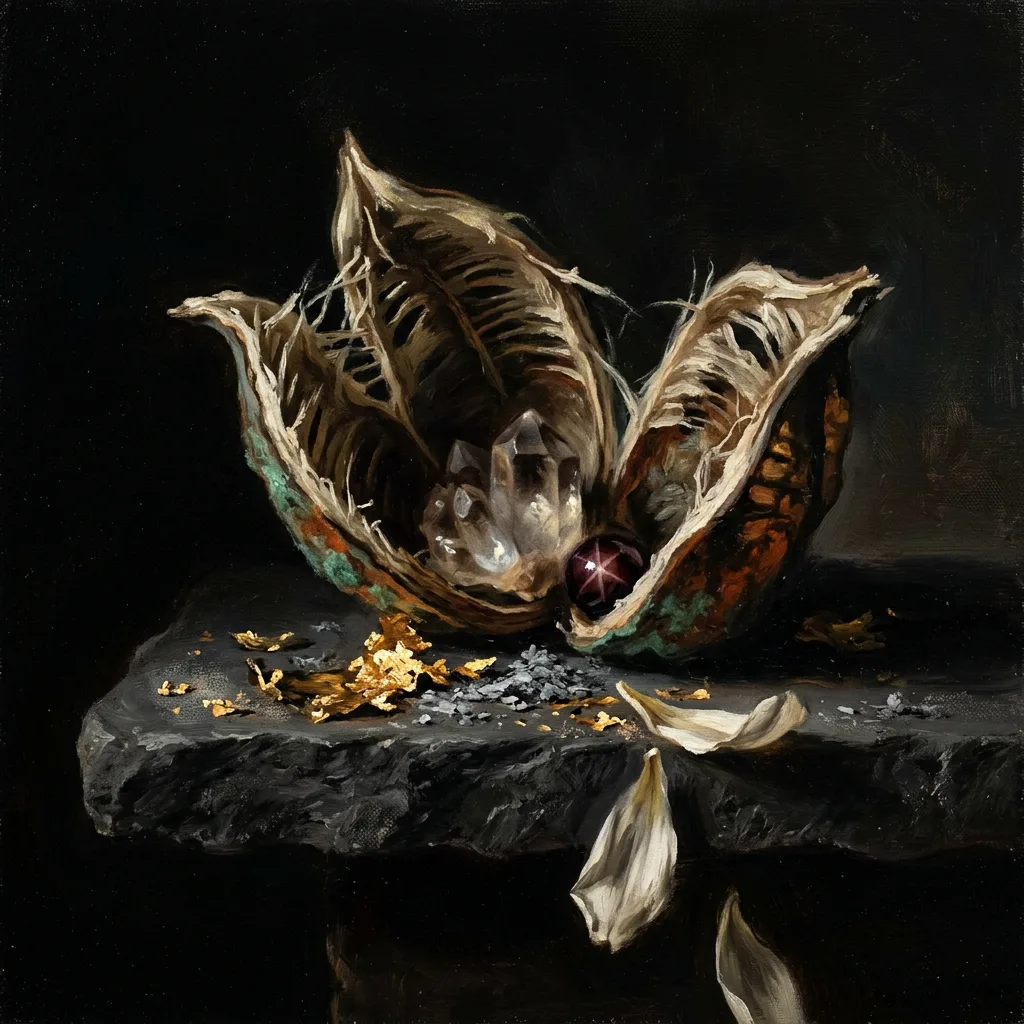
Vestige has a painting and a song of its own. The painting opens the seedpod that the pendant closes: smoke held in the hollow, a small star kept in the dark. The song carries the same passage in sound, leaving the borrowed gold and keeping what holds.
Leave the borrowed gold
In the hollow, smoke remains
In the dark, a star is held
What the fire could not keep
I no longer carry
Only what the silence shaped
Rests against the heart.
The work beyond a
single piece
We focus on the woman in transition: what she is leaving, what she chooses to carry, and what she is ready to begin. The Crown Jewels experience meets her at those turning points. Through multicultural influences, storytelling, symbolism and craftsmanship, we give change a lasting form in wearable art.
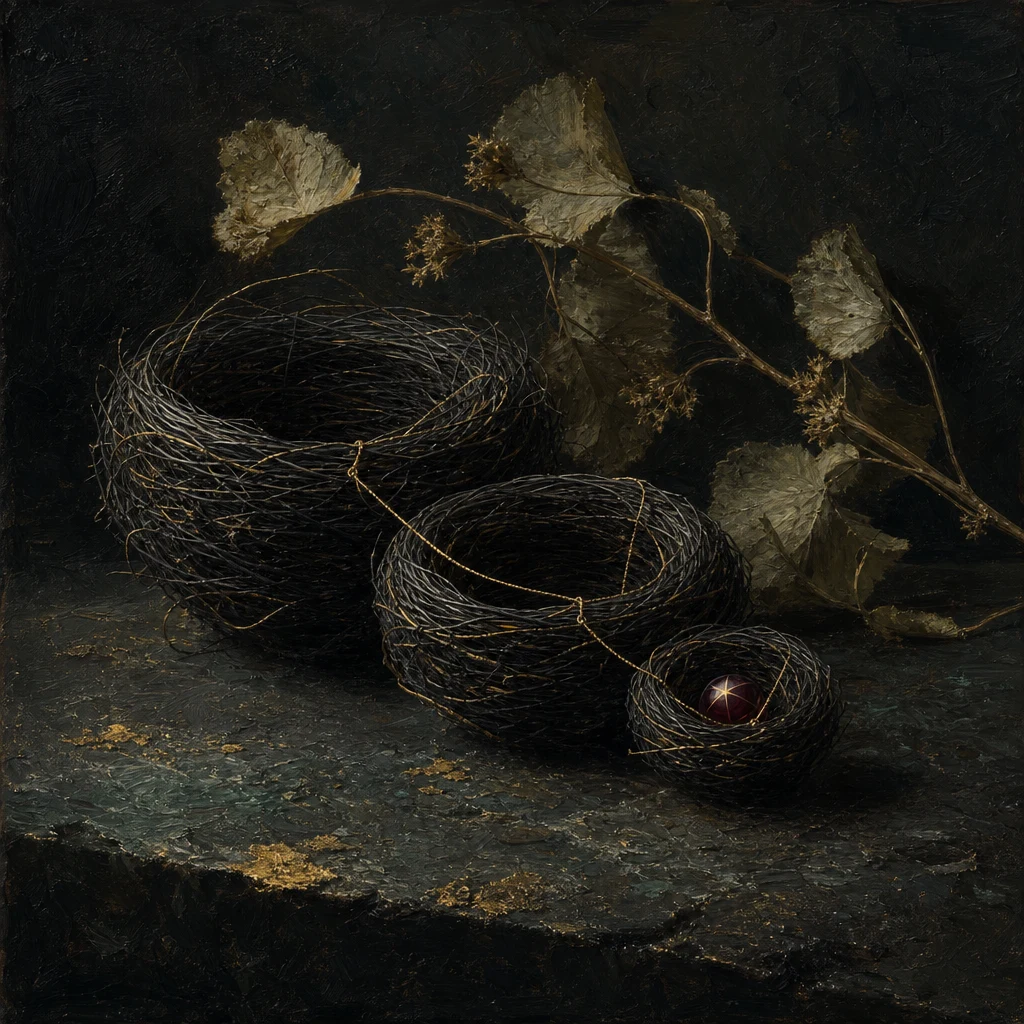
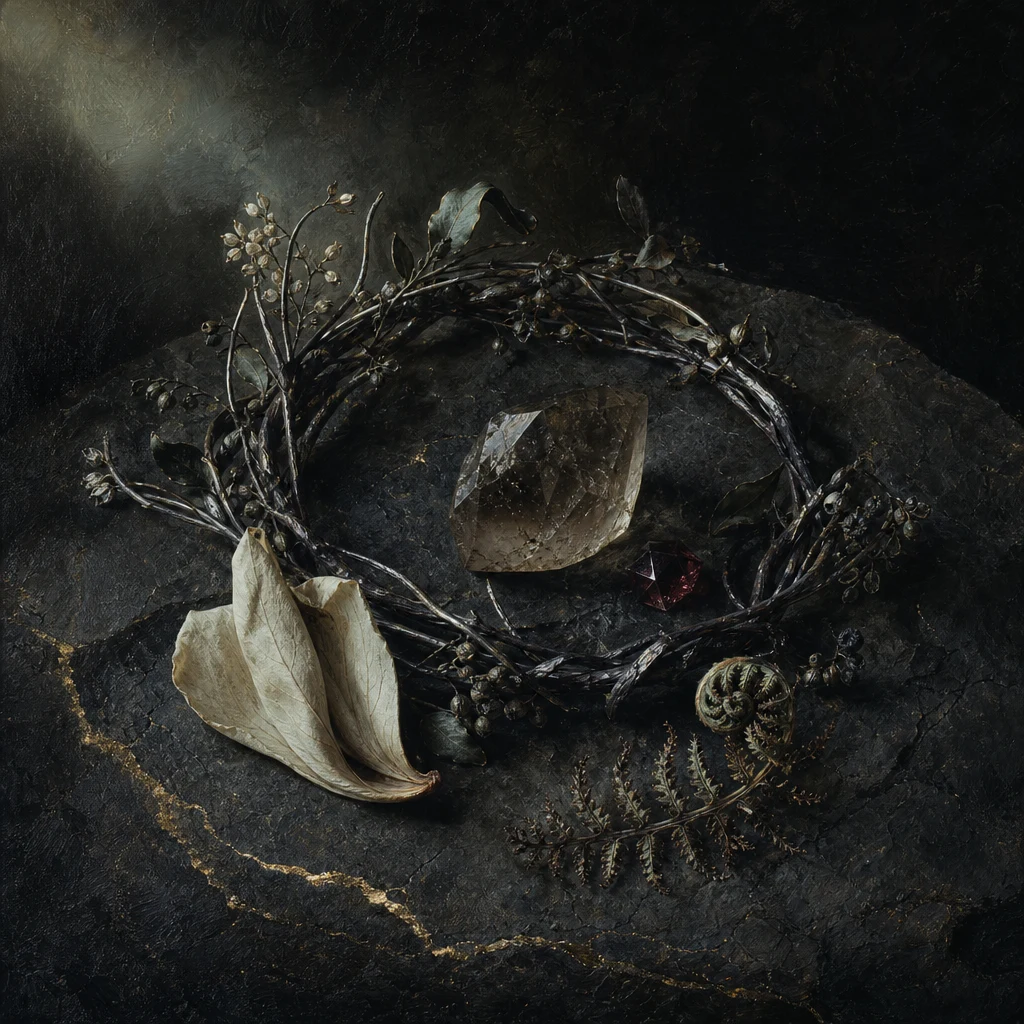
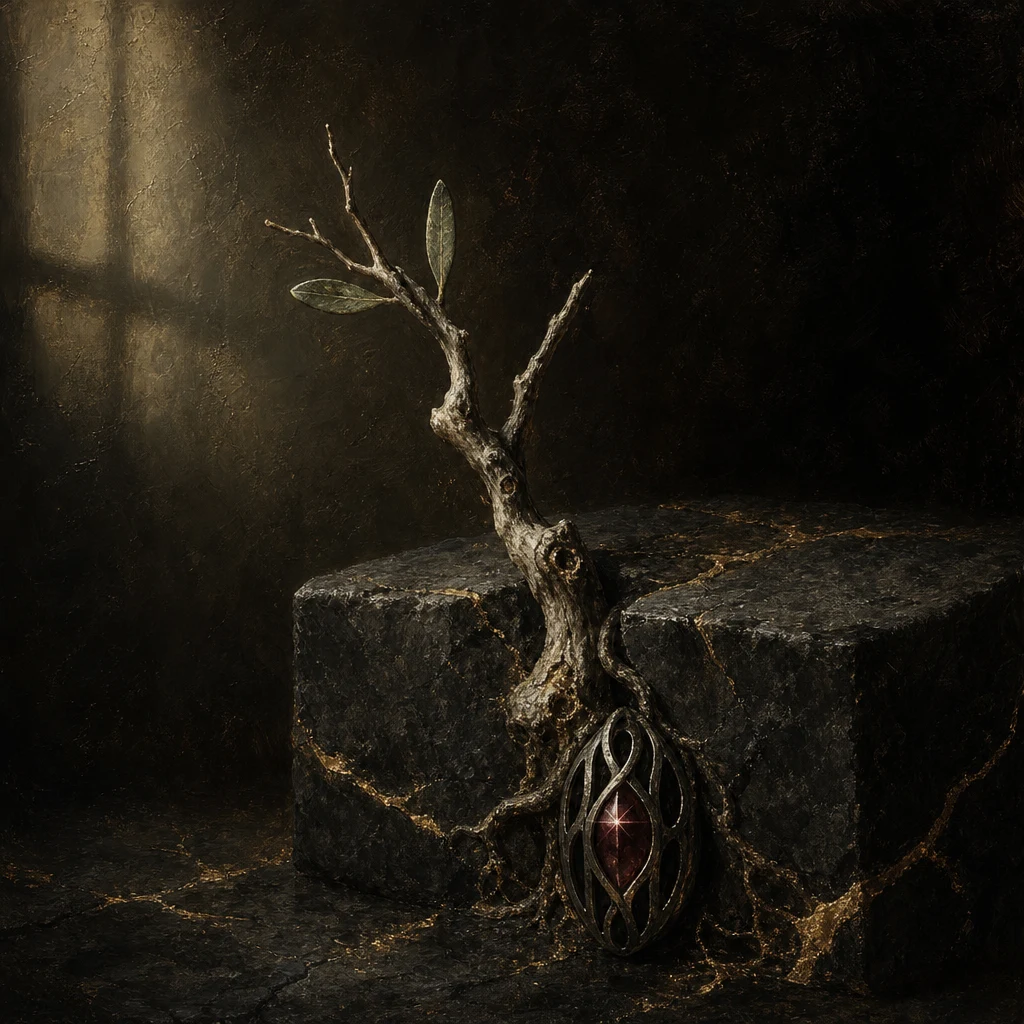
Where we meet her
Our next phase follows one question: where can we meet a woman in transition, and how can art honor what that change means to her? It guides the partnerships we pursue, the collections we develop, and where we reinvest our time and capital. We are building beyond jewelry as an object of consumption, toward a house that gives personal change a considered creative expression.
A change of life asks for more than another possession. The Crown Jewels experience begins by meeting her in transition, rather than waiting for her to enter a jewelry store. This changes how we build relationships: with matchmakers around new love, divorce attorneys around an ending and a new beginning, and boutiques and hotels around travel that marks a promotion, anniversary or honeymoon. Milestone jewelry parties, including celebrations for children, and real estate gifting for a new home extend that same purpose into family life.
The opportunity is to move from marking an occasion with a purchase to giving a transition creative expression. Multicultural influences, storytelling, symbolism and craftsmanship connect the jewelry with accompanying artwork and composed music. Together, they form the Crown Jewels experience: wearable art, with work to live with and to return to, rather than a purchase defined by status alone.
What she carries forward
OATH & HEIR is how we are working to reshape the memorial jewelry market: moving beyond a purchase centered on bereavement toward an experience of remembrance and legacy. In our own survey, 88% of respondents wanted a memorial jewelry experience. The need we are addressing is not simply access to a keepsake. It is confidence in its quality, room to choose when to create it, and a way to honor someone without making physical remains the starting point.
Our established collection, now being prepared for rollout with our bench, makes space for a grandmother creating an heirloom for her grandchildren, a family developing its crest, or someone commemorating a person still living as well as someone lost. Meeting her in transition means allowing remembrance to begin before loss, or long after it—not asking her to make a lasting decision in the first days of grief. That opens a broader role for fine jewelry: legacy shaped with intention, supported by defined materials and meticulous bench work.
A direction worth building
Moving beyond the one-time transaction asks us to build for a longer relationship. A woman may first find us at a new beginning and return when another part of her life changes. Our commercial discipline supports that continuity. A curated pricing model accounts for LBMA gold price benchmark fluctuations, platinum spread ratios and shifts in gemstone and metal markets, helping us make considered material and production decisions as conditions change.
Our next step is to carry the personal attention of a commission beyond the limits of an online purchase. From our direct-to-consumer foundation, we are planning our first owned store in Georgia: a place for the conversation, the jewelry and its accompanying art to be experienced together. Partnership development has already begun in Asia, with WeChat mini programs among our plans. Further ahead, a flagship atelier in Europe and a presence in South America and South Asia would bring that approach into new cultural settings. The purpose of that growth remains the same: meeting women in transition with work that gives the change meaning.
Slower to develop, specified in writing, checked at
the bench.
We speak with prospective investors and partners about the designs, the materials and the methods used to make and inspect them.