

If I Went to the Met Gala: Art, Gold, and the Stories We Wear
The 2026 Met Gala theme was Costume Art — and for the first time in years, the brief felt genuinely serious. Curated by Andrew Bolton, the accompanying exhibition filled the new Condé Nast Galleries with roughly 400 objects spanning 5,000 years: fashion paired with sculpture, painting, and antiquity from the Met's own collection, organized not by era or designer but by body type. The Naked Body. The Anatomical Body. The Pregnant Body. The Mortal Body. The dressed form as subject, not backdrop. The directive to guests was simply: fashion is art.
I didn't attend. But I've been thinking about what I would have worn if I had — and more importantly, what those choices would have meant. Because for me, jewelry and fashion have never been separate from art history, from inheritance, from the weight of objects that carry stories longer than the person wearing them.
These are my three interpretations. Three artists. Three wholly different emotional registers. All entirely Crown of Sadie.
Look One
Flower as Form
Georgia O'Keeffe · American Modernism · Hibiscus with Plumeria, 1939
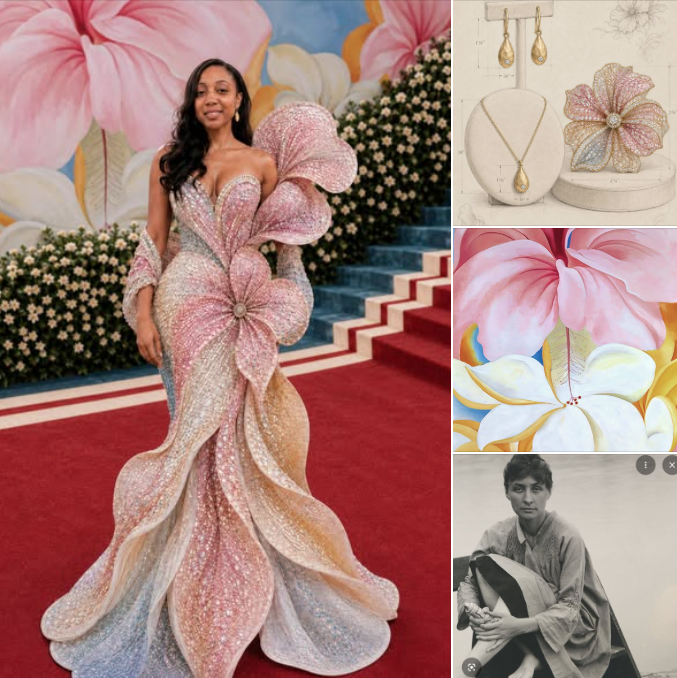
Georgia O'Keeffe is one of the artists I return to most often — not because her work is decorative, but because it refuses to be. Her flowers are monumental and intimate at the same time, drawn so close they become architectural: petals as walls, stamens as columns, the whole interior of a bloom magnified until you realize you are standing inside something alive. I think of her paintings as portraits of femininity rendered without apology — softness as structure, presence as form, bloom as power. Hibiscus with Plumeria was painted in 1939 after O'Keeffe traveled to Hawaiʻi on a commission from the Dole Pineapple Company, and it carries the slightly surreal quality of a mind fully arrived in a new landscape. The look draws from two sources at once: the painting and the painter herself. O'Keeffe dressed with a sculptor's restraint — black, white, architectural silhouettes, nothing decorative for its own sake. The jewelry translation turns the hibiscus into a sculptural brooch: petals as gemstone fields, the center diamond as the painting's focal point, O'Keeffe's movement translated into structure, shine, and command.
Look Two
The Woman in Gold
Gustav Klimt · Vienna Secession · Portrait of Adele Bloch-Bauer I, 1907
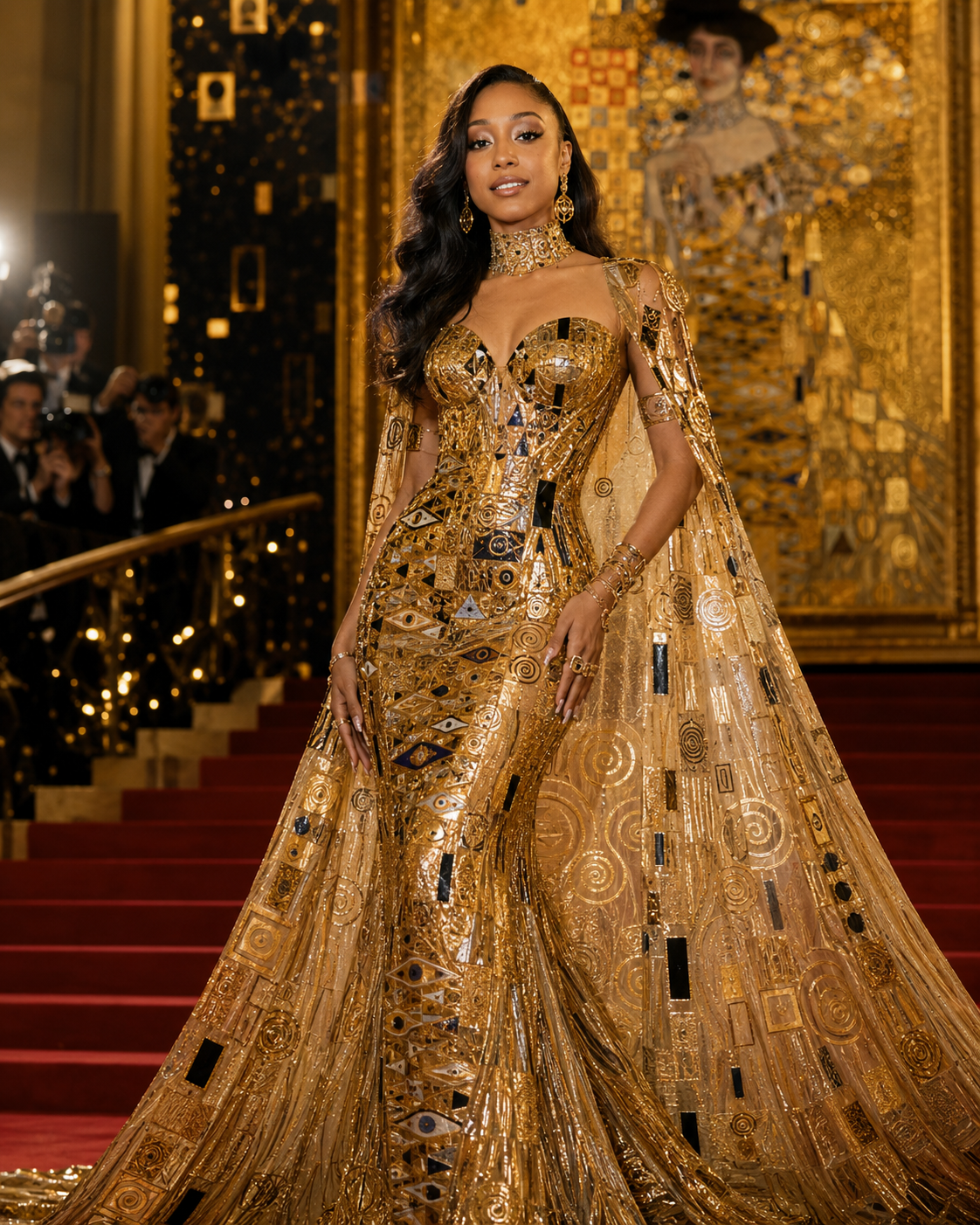
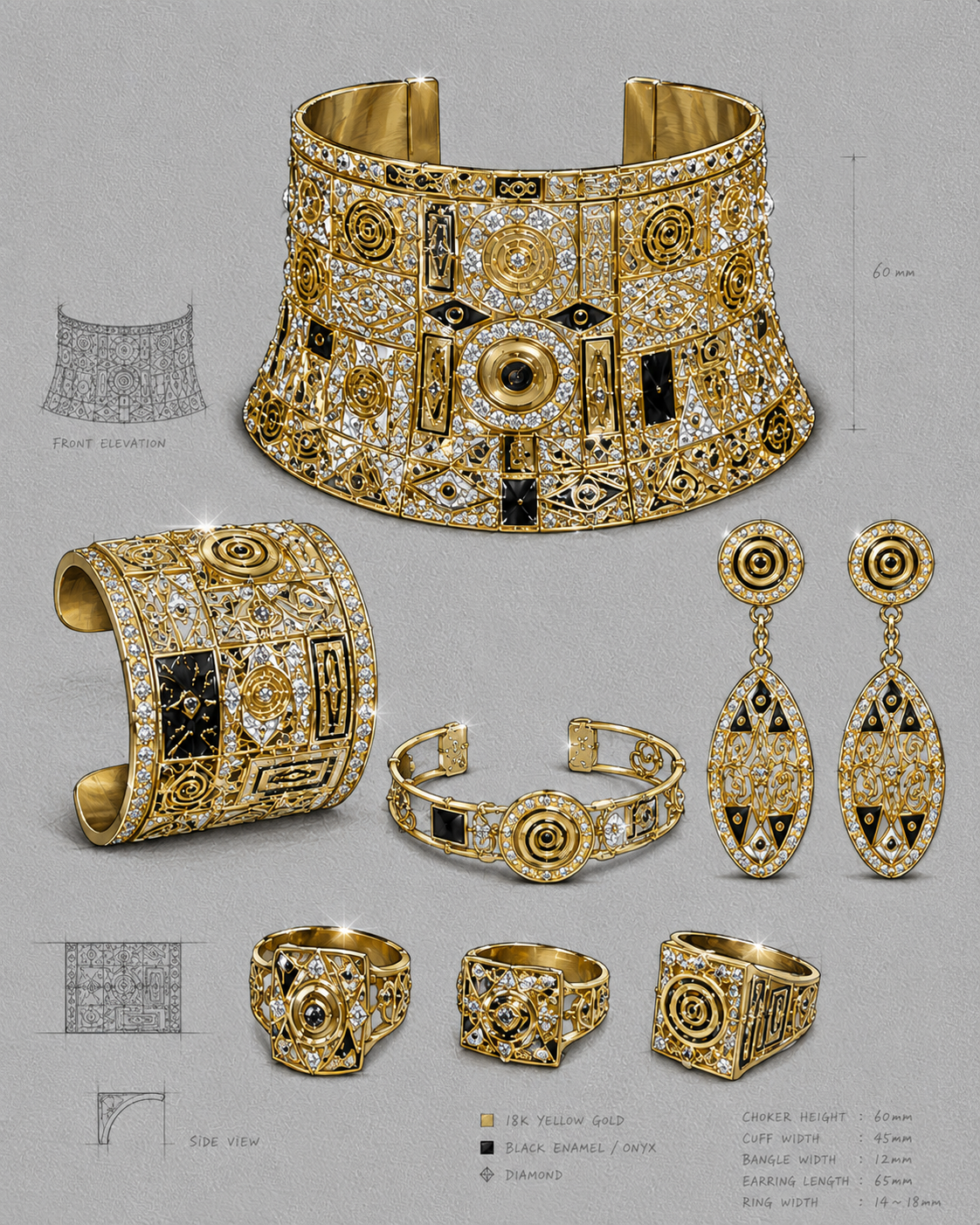
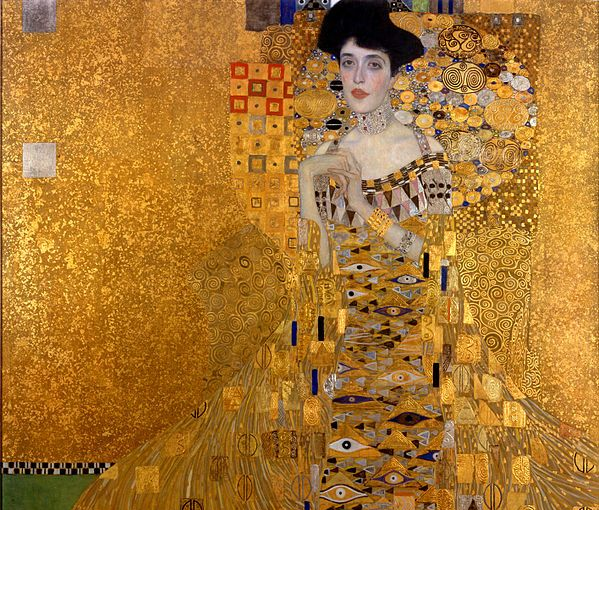
Klimt's Portrait of Adele Bloch-Bauer I is the painting I have loved longest — a woman half-dissolved into gold, Byzantine geometry surrounding her body, and I loved it before I knew its name. He applied actual gold and silver leaf to canvas during his Golden Phase, treating the surface like a medieval illumination. Adele was a Viennese Jewish socialite and arts patron; her portrait was seized by the Nazis when they rose to power, and it took her niece Maria Altmann decades of legal battle to recover it. That history is inseparable from the object — and it's exactly the kind of weight Crown of Sadie is built to carry. When we work in 22K gold, in depth of color, in pieces made to outlast the occasion — it comes from the same place. The look I imagined: an 18K yellow gold choker in Klimt's geometric vocabulary, diamonds and black enamel, a cuff, square signet rings. Gold as reclamation. Not decoration.
Look Three
Elegance, Atmosphere, Heirloom
Keith Mallett · Contemporary African American Art · Art Deco Figuration
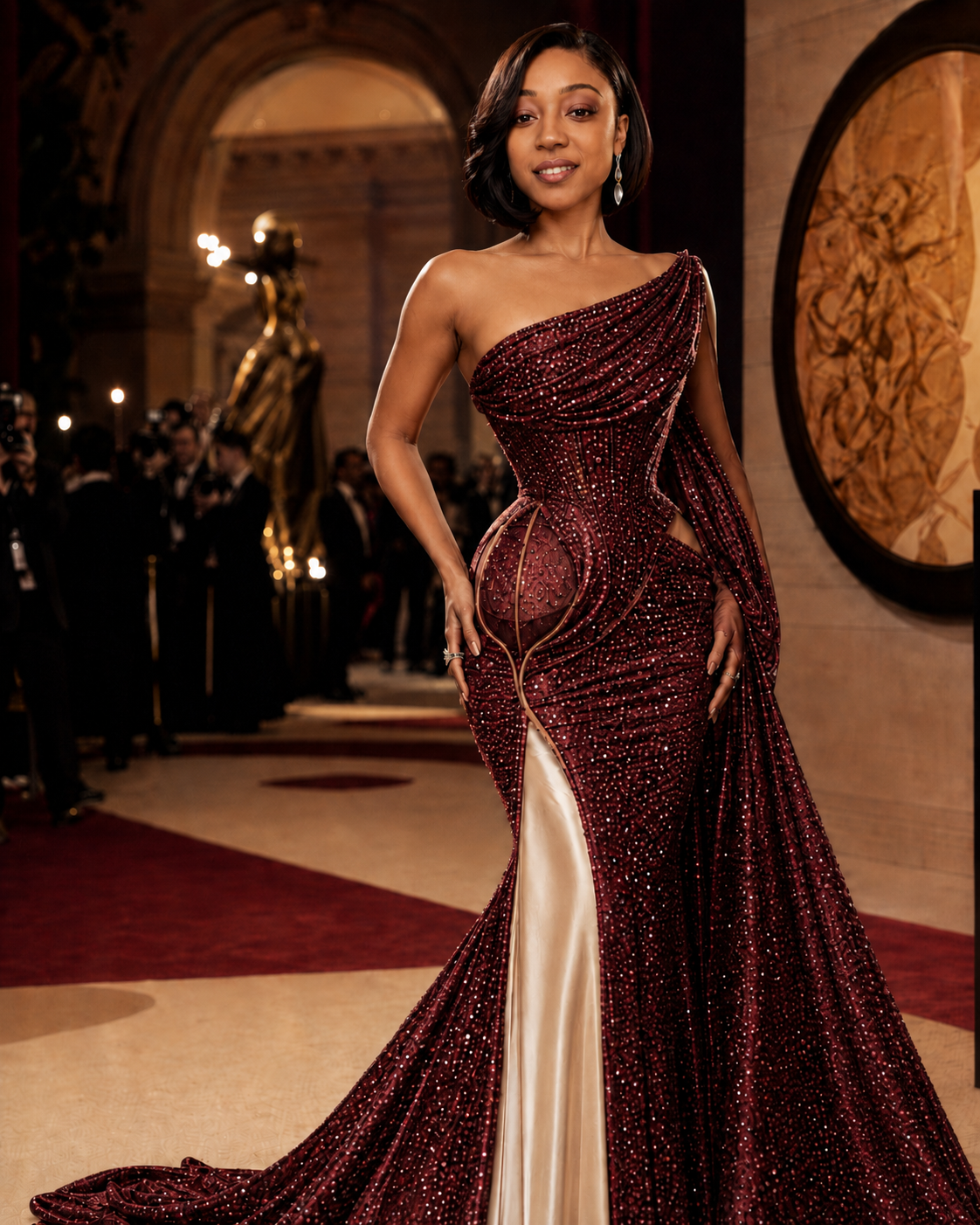
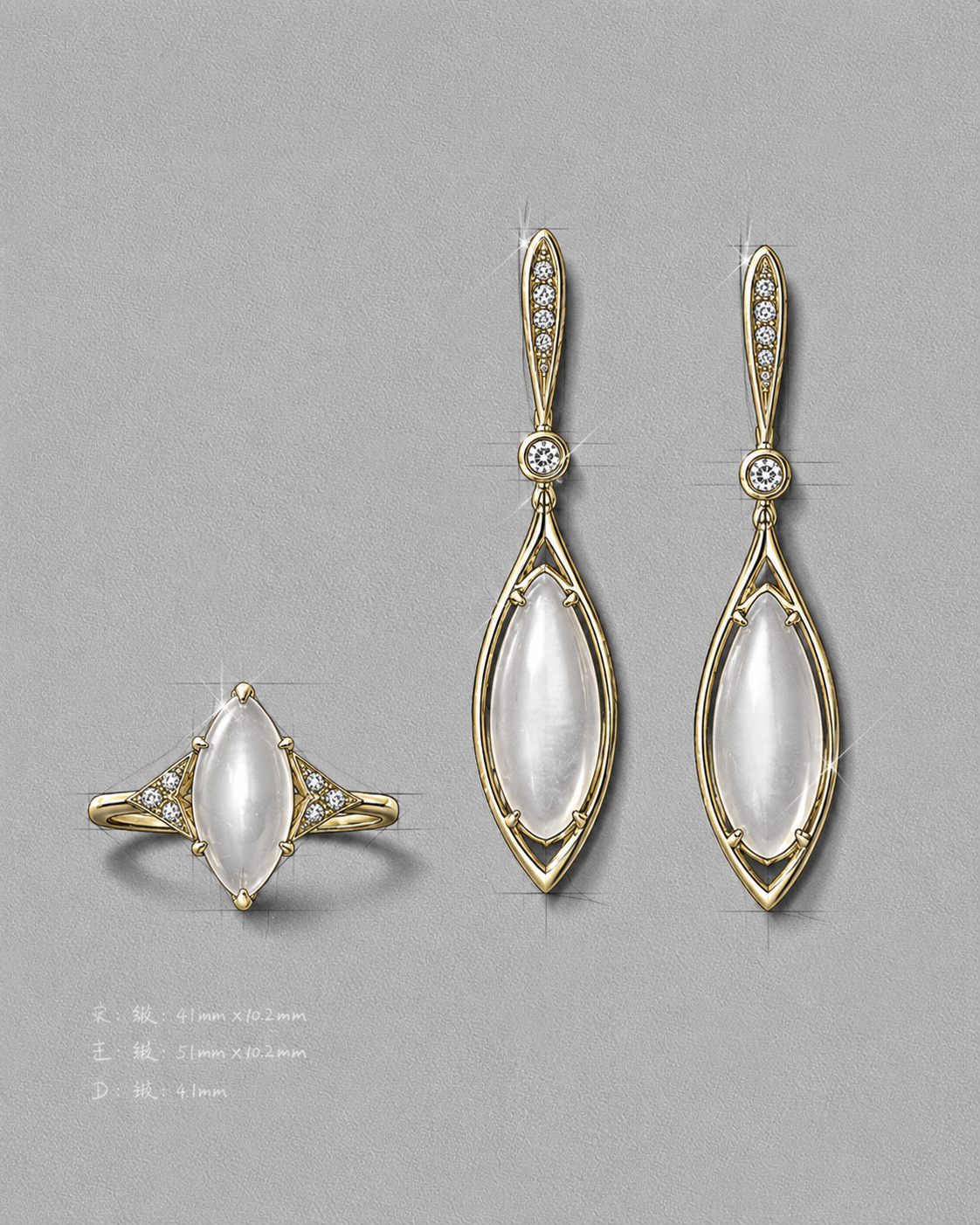

I learned about Keith Mallett through my family — a relative ran an art business centered on Black American artists, and my father was part of it. I grew up with their catalogs, real printed catalogs with weight to them, and Mallett's work always stopped me: elongated figures with quiet dignity, warm interior light, faces turned slightly away as if protecting something private. His subjects are women who have decided something important and are sitting with the decision. That care for what gets preserved — what gets passed forward — is exactly what Crown of Sadie is built on. The look I imagined translates that atmosphere: deep burgundy velvet, one-shouldered, Art Deco construction lines in champagne gold, a silhouette that moves with intention. The jewelry: marquise moonstone drops in 18K yellow gold with pavé diamond bails, white stone against deep wine, the elongated navette echoing the proportions Mallett gives his figures — long, considered, reaching slightly past where you expect.
The Night
Who Wore It
A brief, personal ranking of the looks that earned their place in the room

That's what makes a night like the Met Gala worth thinking about, even from the outside. Fashion at its most intentional asks the same question jewelry does: what are you trying to say, and how long do you want it to last?
Then there were the guests who actually attended. A few of them answered the brief with the precision I was looking for.
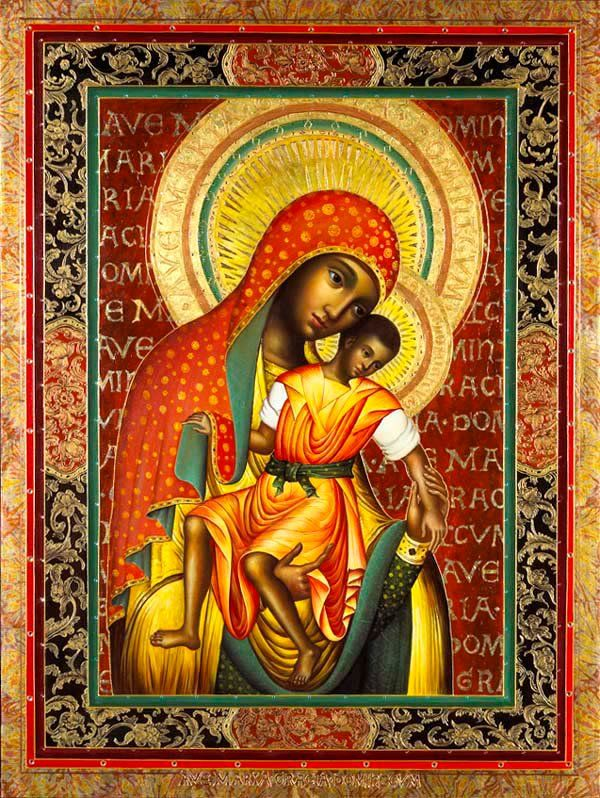
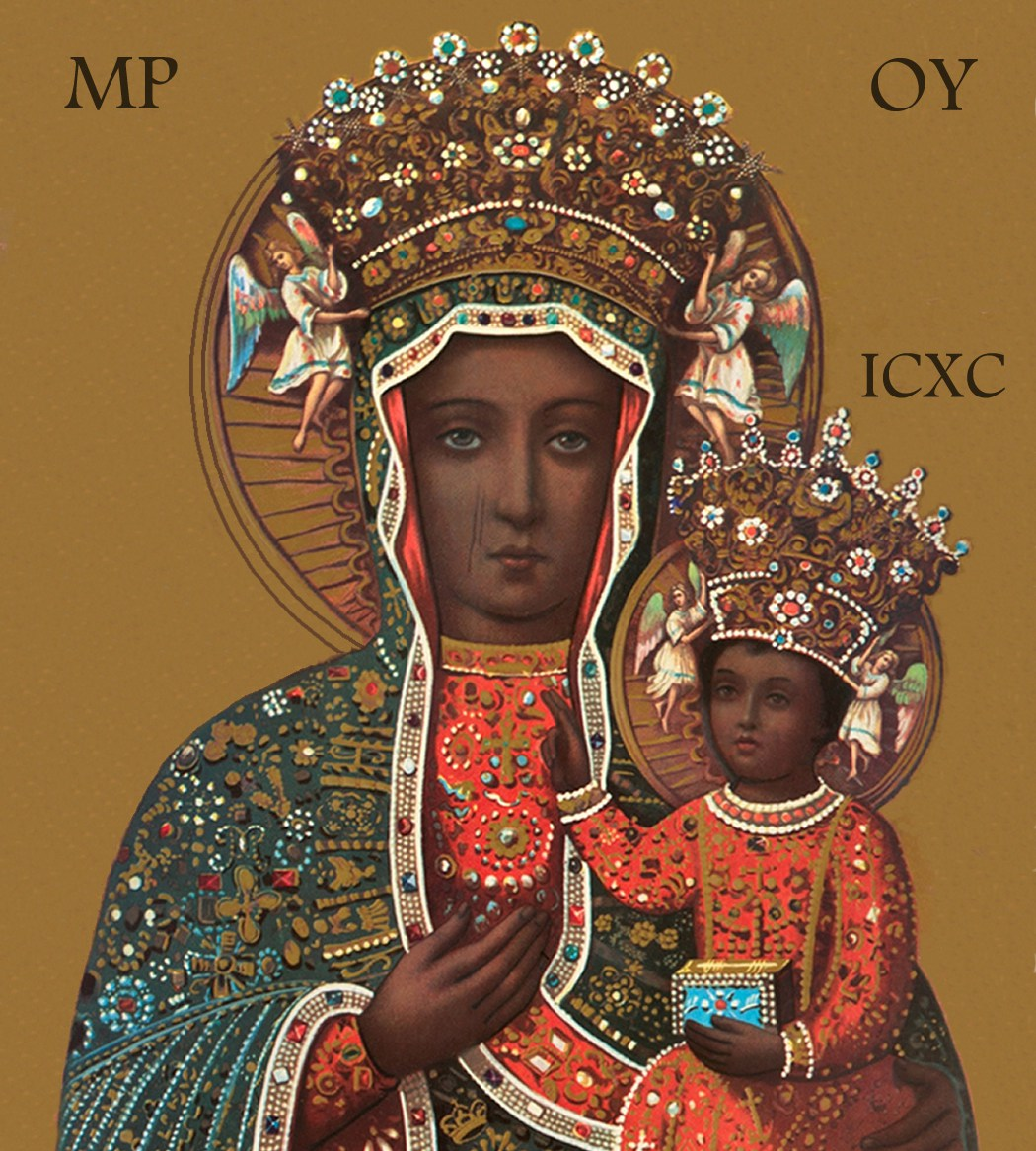
Anok Yai. A Balenciaga collaboration with Pierpaolo Piccioli that turned her into a bronze Black Madonna — prosthetic styling, a hand-sculpted wig that read as carved metal, crystal tears running down her face like a weeping statue of the Virgin Mary. She was not wearing a look. She was performing religious iconography as living sculpture. First.
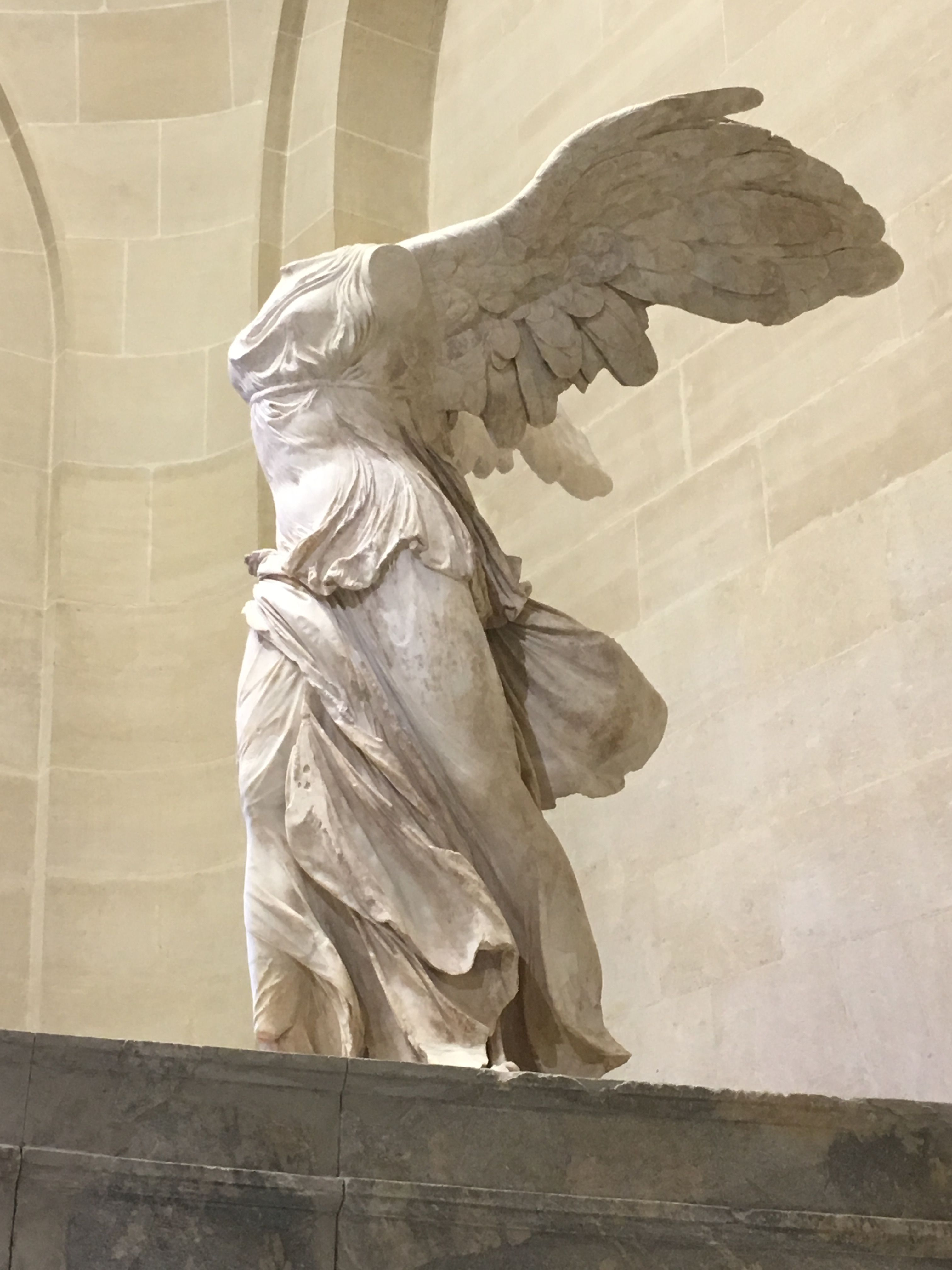
Kendall Jenner. A custom GapStudio gown by Zac Posen built from liquid cotton jersey — literally the fabric of a white t-shirt — hand-dyed in tea, draped using classical wet drapery technique over a leather bodice sculpted to her body. The look was inspired by the Winged Victory of Samothrace. Once inside, she unfurled detachable wings printed with the actual sculpture. The conceptual distance traveled from Gap basics to Greek antiquity was real. Second.
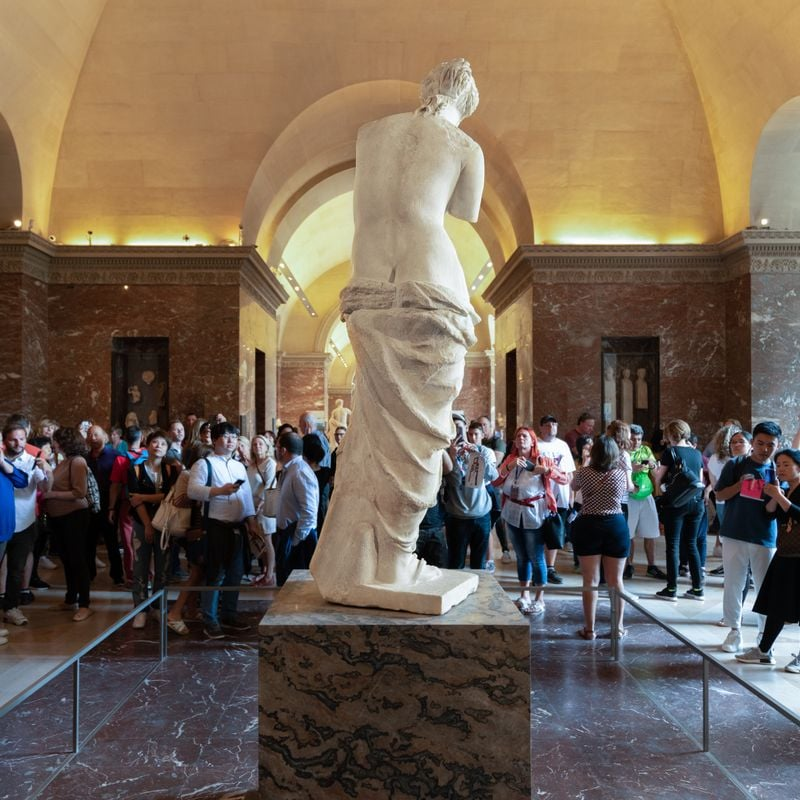
Chase Infiniti. A custom Thom Browne dress inspired by the Venus de Milo — 1.5 million stacked sequins in over 600 shades of silk fringe, arranged in brushstrokes that made her look like a living impressionist painting. The trompe l'oeil technique mimicked the draping of ancient Greco-Roman marble and then exploded it into color. Stone made vivid. Third.
Ciara. A liquid gold gown by Celia Kritharioti, directly referencing Queen Nefertiti: sculptural headdress, crown hairstyle in gold foil, sharp triangular sunglasses that read as futuristic sun-deity iconography. She and Russell Wilson arrived as a coordinated study in Egyptian royalty. Gold as divine authority, not decoration. Fourth.
Honorable mention to Gracie Abrams, who wore a custom Chanel gown with beadwork and gold leafing drawn directly from Klimt's Portrait of Adele Bloch-Bauer I — the same painting that inspired Look Two. Layered chiffon, gold leaf, the body appearing to step out of the canvas. She wore my favorite painting on her body. That counts.